


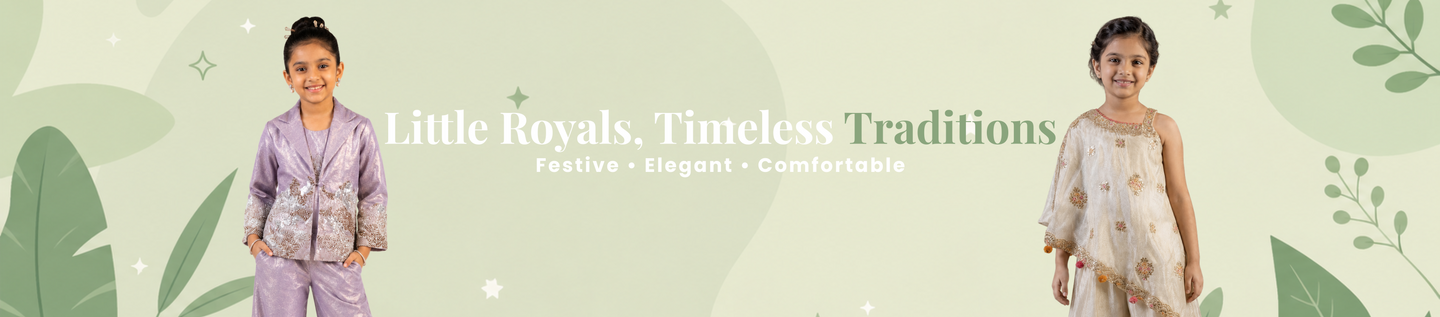
Girls Ethnic Wear
15 products


Elegant Cream Embroidered Palazzo Set for Kids Girls


Elegant Green Embroidered Palazzo Set for Girls


Elegant Pink Embroidered Sharara Set for Girls


Elegant Purple Embroidered Lehenga Choli Set for Kids Girls

Multi Color Embroidered Co-Ord Set for Girls – Georgette Party Wear Outfit with Dupatta


Purple Embellished Party Gown for Girls – Synthetic Kids Ethnic Dress


Red Floral Printed Lehenga Choli with Dupatta for Girls – Satin Silk Party Wear


Peach Embellished Party Gown for Girls – Crepe Satin Elegant Dress


Purple Embellished Co-Ord Set for Girls – Metallic Tissue Silk Party Wear Outfit


Brown Striped Co-Ord Set for Girls – Cotton Slub Casual Ethnic Outfit


Peach Printed Co-Ord Set for Girls – Satin Silk Ethnic Party Wear Outfit


Blue Embellished Ethnic Co-Ord Set for Girls – Satin Silk Party Wear Outfit


Pink Embroidered Co-Ord Set for Girls – Satin Crepe Party Wear Outfit


Purple Embroidered Co-Ord Set for Girls – Organza Silk Festive Party Wear Outfit


Fawn Embellished Co-Ord Set for Girls – Organza Base Festive Party Wear Outfit
- Popularity
- Price Low To High
- Price High To Low
- New Arrivals
- Bestseller
- Most relevant
Ethnic Wear for Girls - Buy Kids Ethnic Dresses Online
Ethnic wear for girls has to clear a bar adult clothing does not: she has to want to keep it on. Halls are warm, functions run long, and a child tugging at a scratchy neckline will be out of it before the sangeet starts. Our range runs from printed cotton for ordinary days to embellished satin and organza for the wedding season.
What counts as ethnic wear for girls?
The term covers anything Indian and traditional cut to a child's size: co-ord sets, lehenga cholis, kurta sets and ethnic gowns. Many add a dupatta, which on a young girl works better stitched or pinned at the shoulder than left loose.
Kids lehenga vs girls kurta set vs co-ord set: what is the difference?
A kids lehenga is a three-piece: a flared skirt, a fitted choli and a dupatta. It is the festive one — a child will spin in it, so it gets bought for weddings and Navratri. A girls kurta set, or salwar suit, is the everyday one: a straight kurta over a soft salwar or churidar, comfortable for school functions and pujas. A co-ord set falls between them, a top and bottom sold as one and matched in fabric and print: less twirl than a lehenga, much less to manage, and it carries a party and a family lunch equally well. An ethnic gown is a single stitched piece with no separates, the quickest to get a small child into and out of. Grown-up versions sit in our lehenga choli, kurti set, co-ord set and gown ranges.
Which fabric is best for an Indian dress for girls?
Fabric decides comfort, and comfort decides everything else. Cotton breathes and does not cling in humidity, so it suits summer and anything she will run in. Satin is smooth against skin and carries a sheen that photographs well under hall lighting. Crepe drapes close and moves with a child instead of ballooning. Organza and tissue are the party fabrics, crisp and structured but stiff — check the outfit is lined and no raw edge sits against the neck or inner arms. Whatever the shell, the lining is what actually touches her, and it should be soft cotton or a smooth satin.
Which silhouette suits her age and build?
Height and patience matter more than body shape here. For toddlers, keep hems clear of the ankle — a floor-length lehenga is a trip hazard on a dance floor — and favour elastic waists over drawstrings and hooks. From school age into the early teens, a flared lehenga or an A-line gown flatters almost every build and stays forgiving as she grows. Older girls self-conscious in a fitted choli are happier in a straight co-ord set or kurta set.
Girls' ethnic wear colours: haldi, mehndi, sangeet and puja
Match the shade to the function. Yellow and marigold orange for haldi — also the colours you will not mourn when they stain. Green and teal for mehndi. Purple, red, pink and blue earn their keep at sangeet and reception evenings, because they hold their detail under artificial light where black flattens out. Peach, fawn and ivory are the puja and daytime shades.
How to style ethnic wear for girls
Keep it light and safe. Small jhumkas or studs rather than heavy chandbalis, a thin bangle or two, nothing sharp at the neck. Skip anklets on a polished floor. Juttis or mojaris finish an ethnic outfit properly; ballet flats work under a gown. Never heels she cannot stand in all evening. A small potli bag finishes the look.
How to wash and store a girl's ethnic outfit
Wash cotton sets cold, inside out, on a gentle cycle and dry them in shade; direct sun fades printed and dyed cloth. Have embellished, silk, organza and tissue outfits dry-cleaned, as sequins and embroidery threads snag in a machine drum. Iron on a low setting through a thin cotton cloth, never straight over a motif. Store festive pieces on padded hangers in a breathable cotton cover rather than polythene, which traps moisture.
Why buy girls' ethnic wear from Shree Shivam
Shree Shivam has been an Indian ethnic and bridal wear house for over a decade. Girls' ethnic wear sits alongside our boys' ethnic wear for siblings dressed to match, wedding clothing for the rest of the family, and shararas for her mother. We ship free across India and offer seven-day returns.
FAQs
What is the difference between a kids lehenga and a girls co-ord set?
A kids lehenga is a three-piece — a flared skirt, a fitted choli and a dupatta — and it is the festive choice, cut to swish when she spins, which is why it suits weddings and Navratri. A girls co-ord set is a two-piece with a straight or lightly flared bottom: less twirl, but much less to manage and far easier to keep on a child through a long function. If the event is formal and photographed, pick the lehenga; if she is going to run about, pick the co-ord set.
Which fabric is best for a girl's ethnic dress in summer?
Cotton. It breathes, absorbs sweat and does not cling in humidity, so it works for daytime functions and outdoor events; cotton slub gives the same comfort with a little texture. Georgette and crepe are light and drape close, which makes them a reasonable middle ground for an evening. Organza and tissue look wonderful but are stiff and warm, so keep them for shorter, indoor occasions and make sure the outfit is properly lined.
What colour should a girl wear to a wedding?
Match the shade to the function. Yellow and marigold orange for haldi, and those are also the colours you will not mourn when they stain. Green and teal for mehndi. Purple, red, pink and blue for sangeet and reception evenings, because they hold their detail under artificial light where black flattens out. Peach, fawn, ivory and pastels are the daytime and puja shades and photograph beautifully in natural light.


