


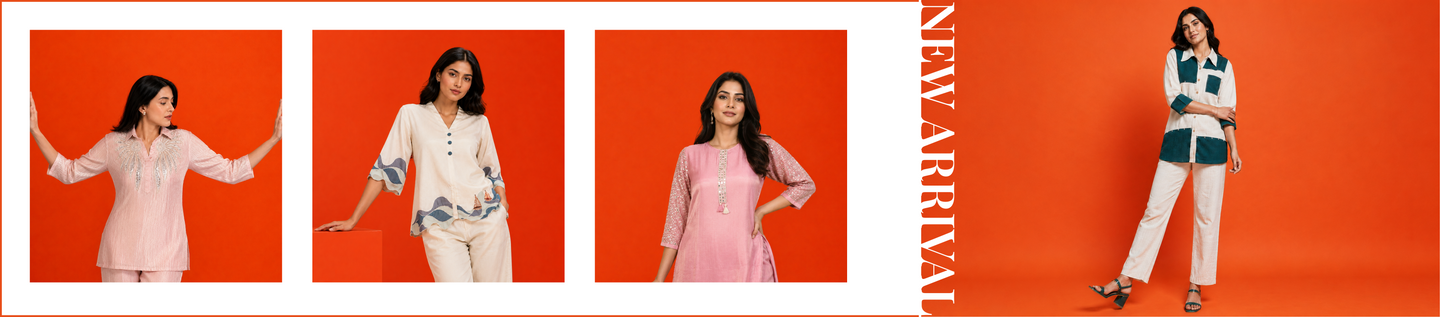
Kurti Sets for Women
47 products


Beige Printed Kurti Set with Embroidered Neckline & Kurti Pants


Pink Floral Printed Designer Kurti Set with Kurti Pants


Elegant Rani Red Printed Kurti Set with Dupatta


Elegant Black Embroidered Kurti and Palazzo Set with Printed Dupatta


Blue Embellished Kurti with Pants for Women – Linen Blend Ethnic Wear


Elegant Mustard Embroidered Kurti Set with Pants


Elegant Onion Embroidered Kurti Set with Palazzo


Elegant Peach Floral Kurti Set with Palazzo and Dupatta


Exquisite Blue Embroidered Jacket with Tie-Dye Kurti Set


Elegant Grey Embroidered Kurti Sharara Set


Elegant Rani Pink Embroidered Jacket Kurti Set


Elegant Cream Embroidered Button-Down Kurti


Elegant Grey Embroidered Sleeveless Kurti Set


Elegant Cream Floral Embroidered Kurti Set


Elegant Pink Angrakha Kurti with Intricate Embroidery and Sharara


Elegant Mustard Yellow Embroidered Anarkali Suit Set


Elegant Ivory Embroidered Anarkali Suit Set


Elegant Black Floral Printed Kurti Set with Embroidered Neckline


Elegant Red Ethnic Anarkali Suit for Women


Elegant Pista Green Embroidered Tunic Kurti for Women


Elegant Pink Floral Embroidered Kurta Palazzo Set with Jacket


Sky Blue Embroidered Cotton Kurta Set for Women | Straight Kurta with Pants


Beige Embroidered A-Line Kurta Set with Straight Pants


Pink Embroidered Kurta Set with Flared Palazzo & Embellished Dupatta
- Popularity
- Price Low To High
- Price High To Low
- New Arrivals
- Bestseller
Kurti Sets for Women - Buy Designer Kurti Sets Online
A kurti set arrives as a matched unit — kurti on top, a bottom cut to go with it, usually a dupatta — so the hardest part of dressing is already settled. It stretches from a working Tuesday to a cousin's mehndi.
What is a kurti set, and how is it different from a kurta set?
Length, mostly. A kurta is the longer tunic, falling from the knee to the ankle; a kurti is its shorter cousin, ending between mid-thigh and the knee. Longer reads formal; shorter moves better with trousers. A kurta set for women leans festive, because the extra length already does.
Kurti set vs salwar suit vs co-ord set: what is the actual difference?
A salwar suit is the classical three-piece: kurta, salwar — the roomy trouser gathered tight at the ankle — and dupatta. It is the most formal of the three. A kurti set is the modern rework, with the salwar swapped for pants or palazzo. A co-ord set is defined by matching print rather than tradition, and may not be ethnic at all. The festive cousins differ too: a sharara flares in one sweep from the waist, like a divided skirt, while a gharara breaks at the knee, joined by a band called the gota, so the flare starts below the knee rather than at the hip.
Kurti with palazzo, pants or sharara: how do I pick the bottom?
The bottom decides what the outfit is for, more than the kurti does.
Straight pants
The narrowest option: they keep the line vertical and look correct in an office.
Palazzo
Wide from the waist, so air moves through and nothing sticks to your legs — which is why a kurti with palazzo is the summer default across India. The long hem wants a heel.
Patiala and dhoti pants
Patiala pleats gather deep at the hip, so balance them with a fitted, shorter kurti; a loose one buries the waist. Dhoti pants fold and drape at the front, closer to indo-western wear than to a suit. Both sit wider than a churidar, which ruches into rings at the ankle.
Cotton kurti set or silk: what does each fabric actually do?
Cotton, muslin and linen
Cotton breathes, absorbs sweat rather than trapping it, and does not cling in humidity — which is why a cotton kurti set survives an Indian summer and a synthetic one does not. It creases; that is the price of the comfort. Muslin is cotton spun fine, lighter and cooler still.
Silk, chanderi and dola
Silk comes alive under evening light, which is why it owns the wedding calendar. Chanderi blends cotton with silk: airy, slightly sheer, faintly glowing, and it holds its shape — the pick for daytime festive wear and puja. Dola silk has body and a structured fall, so embroidery sits on it cleanly, while chinon drapes close. Organza and tissue are crisper and near-transparent: they hold a shape alone but snag on rings and want a lining.
Which kurti set silhouette suits my body shape?
A straight kurti keeps one unbroken vertical line, cleanest on slim and rectangular frames, and needs a side slit to walk properly. An A-line narrows at the shoulder and widens from the bust, skimming the hips and stomach rather than gripping them — the safest choice for pear and apple frames. Flared cuts release volume from a fitted yoke, though a petite frame should keep the flare shorter. A kaftan hangs from the shoulder with no waist at all: forgiving, but it needs a strong neckline to stop reading as a tent. A cape layer balances wider hips.
Which colour kurti set for haldi, mehndi, sangeet, reception or the office?
Haldi is turmeric, and turmeric always wins: wear yellow, marigold or mustard in cotton you can afford to lose. Mehndi calls for green, from mehendi green through olive, and the test is the sleeve — you sit with your hands held out, so pick one that pushes up. Sangeet is dancing: rani pink, teal or purple with sequin or mirror work, over a palazzo that can move. Reception goes deeper — maroon, wine, navy, black, gold — in silk, tissue or organza. For puja, cream, ivory, pastels and sky blue with light embroidery are the traditional read; for the office, navy, grey, olive or beige in small prints with no shine.
What makes a designer kurti set different from a plain one?
Work, and where it is placed. Chikankari is white-on-white shadow work, subtle and hand-driven; thread and zari build texture; sequin, mirror and crystal work reflect, so they belong at night and look loud at noon. Placement beats quantity — a worked yoke lifts the face, a worked panel lengthens the line. Then check what nobody photographs: whether the dupatta is woven or merely printed.
How do I style a kurti set: jewellery, footwear and bag?
Match the metal to the fabric: printed cotton takes oxidised silver and jhumkas, silk and tissue take gold, kundan or polki. If the yoke is embroidered, drop the necklace and let earrings carry the look — heavy work under a heavy neckpiece is a collision. On the feet, juttis by day and a block heel with palazzo so the hem clears the floor. Carry a potli for a function; a large tote fights a dupatta and wins.
How should I wash and store a kurti set?
Cotton, muslin and linen can be hand-washed or run cold on a gentle cycle, kept separate the first few times because prints bleed. Dry them in the shade, inside out — direct Indian sun strips colour faster than any detergent. Silk, chanderi, tissue, organza and anything carrying sequins or zari should be dry-cleaned: water pulls zari dull and puckers embroidery. Never wring an ethnic garment — roll it in a dry towel and press the water out, then store it in a muslin bag rather than plastic, which traps moisture and yellows fabric.
Why buy kurti sets from Shree Shivam?
Our range runs from printed cotton for daily wear through to embroidered silk built for the wedding season, with dupattas cut to match rather than added as an afterthought, and sizing from small through to plus. We have been an Indian ethnic and bridal wear house for over a decade, we ship free across India, and returns stay open for a week. Dressing a whole function? Our sarees, lehenga cholis and wedding clothing carry the same finish, while kurta pajamas and ethnic wear for girls dress the rest of the family.
FAQs
What is the difference between a kurti and a kurta?
Length, mostly. A kurta is the longer tunic, falling anywhere from the knee to the ankle, while a kurti is the shorter version that usually ends between mid-thigh and the knee. In Indian shops the two words are used interchangeably and nobody minds. As a rule of thumb, the longer the tunic, the more formal and traditional it reads; the shorter it is, the easier it is to wear with trousers and the better it moves through an ordinary day.
Which kurti set fabric is best for summer?
Cotton, and its lighter relatives. Cotton breathes, absorbs sweat instead of trapping it and does not cling in humidity, which is exactly what an Indian summer demands. Muslin is cotton spun very fine, so it is even lighter and falls softly. Chanderi blends cotton with silk and stays airy while carrying a faint glow, which makes it the pick for a daytime function. Avoid satin and heavy synthetics in the heat: they sit on the skin and hold warmth in.
Which kurti set silhouette suits my body shape?
An A-line is the safest answer for most people, because it narrows at the shoulder and widens from the bust, skimming the hips and stomach rather than gripping them. A straight kurti keeps one unbroken vertical line and looks cleanest on slim and rectangular frames. Flared cuts add drama from the chest down, though a petite frame should keep the flare shorter. A kaftan is the most forgiving cut of all, but it needs a defined neckline or shoulder detail so it does not read as shapeless. A cape layer puts structure across the shoulders, which balances wider hips.


