


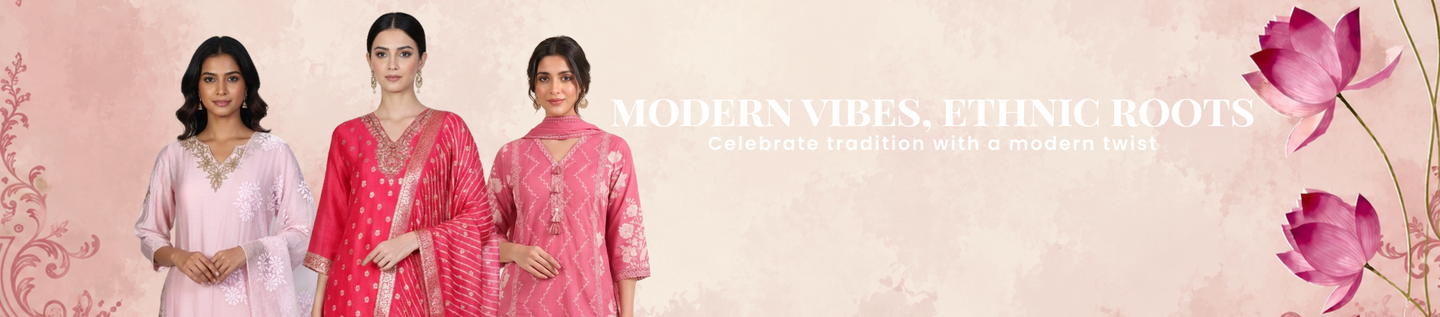
Kurti for Women
15 products


Elegant Mustard Yellow Embroidered Anarkali Suit Set


Elegant Ivory Embroidered Anarkali Suit Set


Elegant Black Floral Printed Kurti Set with Embroidered Neckline


Vibrant Yellow Floral Kurti with Embroidered V-Neck


Elegant Beige Kaftan Style Kurti Set with Palazzo


Elegant Brown Shimmer Kurti Set with Gold Embellishment


Elegant Green Embroidered Kurti Set with Patiala


Elegant Beige Embroidered Kurti Set with Palazzo Pants


Elegant Onion Layered Kurti Set with Embellished Waist and Palazzo


Sky Blue Embroidered Cotton Kurta Set for Women | Straight Kurta with Pants


Beige Embroidered A-Line Kurta Set with Straight Pants


Beige Printed Kurti Set with Embroidered Neckline & Kurti Pants


Pink Floral Printed Designer Kurti Set with Kurti Pants


Traditional Dori Work Mehndi Anarkali Ethnic Dress


Mustard Gown with Gota Patti and Zari Work
- Popularity
- Price Low To High
- Price High To Low
- New Arrivals
- Bestseller
Kurtis for Women — Buy Designer Kurtis Online
A kurti on its own is the most flexible thing in an Indian wardrobe, because it is the only ethnic piece you can wear with jeans without it looking like a compromise. What decides how it wears is the cut and the length, far more than the print on it.
Straight, A-line or short — which kurti cut?
A straight kurti falls in a vertical line from the shoulder and reads the most formal and the most office-appropriate. An A-line flares gently from the bust, which is more forgiving through the waist and hip and the reason it is the most-bought cut in India. A short kurti — hip length or just below — is the one that works with jeans, trousers and palazzos and reads casual by default.
Which fabric for daily wear?
Cotton for heat, and it is not a close call — it breathes, it survives a home wash, and it gets softer with use. Rayon holds colour and drape better through an air-conditioned working day and creases less where you sit. Silk and chanderi move a kurti out of daily wear entirely and into festive.
What to wear a kurti with
- Straight pants or cigarette trousers — the office default.
- Palazzos — cooler and more relaxed, best with a shorter kurti.
- Jeans — works with short and A-line cuts, rarely with a full-length straight one.
- Leggings — the most forgiving, and the reason a longer kurti stays comfortable all day.
Fit: the one thing to get right
The shoulder seam. If it sits where your shoulder ends, a tailor can fix everything else — waist, length, sleeve. If it does not, nothing will save it. Between two sizes, take the larger one: a kurti is cut to skim, not to fit.
Related collections
For the kurti with a matched bottom, see kurti sets, or kurti with pants for the trouser version specifically. Co-ord sets cover the same ground in a western cut. Seven stores across central India, or book a video call.
FAQs
What is the difference between a kurti and a kurta?
Length, mostly. A kurta is the longer tunic, falling anywhere from the knee to the ankle, while a kurti is the shorter version that usually ends between mid-thigh and the knee. In Indian shops the two words are used interchangeably and nobody minds. As a rule of thumb, the longer the tunic, the more formal and traditional it reads; the shorter it is, the easier it is to wear with trousers and the better it moves through an ordinary day.
Which kurti set fabric is best for summer?
Cotton, and its lighter relatives. Cotton breathes, absorbs sweat instead of trapping it and does not cling in humidity, which is exactly what an Indian summer demands. Muslin is cotton spun very fine, so it is even lighter and falls softly. Chanderi blends cotton with silk and stays airy while carrying a faint glow, which makes it the pick for a daytime function. Avoid satin and heavy synthetics in the heat: they sit on the skin and hold warmth in.
Which kurti set silhouette suits my body shape?
An A-line is the safest answer for most people, because it narrows at the shoulder and widens from the bust, skimming the hips and stomach rather than gripping them. A straight kurti keeps one unbroken vertical line and looks cleanest on slim and rectangular frames. Flared cuts add drama from the chest down, though a petite frame should keep the flare shorter. A kaftan is the most forgiving cut of all, but it needs a defined neckline or shoulder detail so it does not read as shapeless. A cape layer puts structure across the shoulders, which balances wider hips.


