


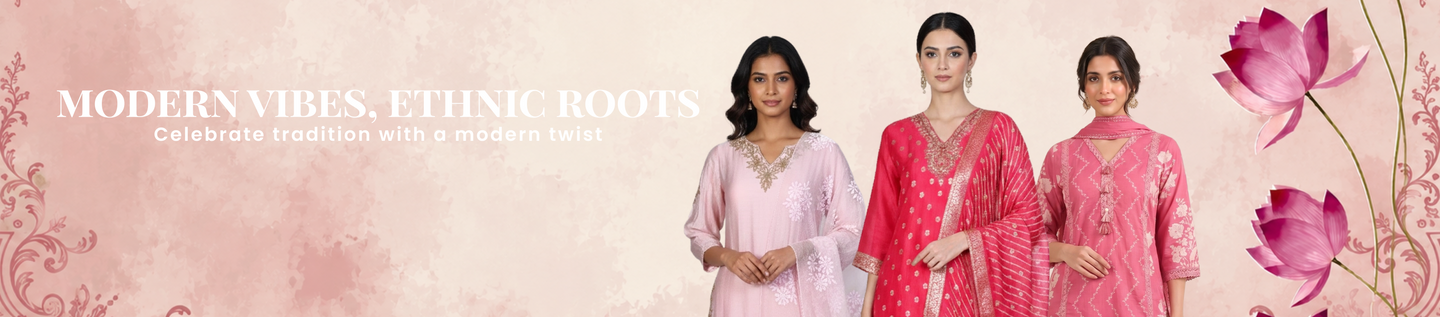
Kurti with Pants for Women
20 products


Vibrant Rust Printed Cotton Kurti and Pants Set


Vibrant Mustard Floral Print Kurta Set with Palazzo Pants


Vibrant Lime Green Printed Kurti and Pants Set


Sky Blue Embroidered Cotton Kurta Set for Women | Straight Kurta with Pants


Pink Floral Printed Designer Kurti Set with Kurti Pants


Pink Embroidered Kurta Set with Flared Palazzo & Embellished Dupatta


Elegant Purple Embroidered Kaftan and Dhoti Pants Set


Elegant Pink Floral Embroidered Kurta Palazzo Set with Jacket


Elegant Peach Floral Kurti Set with Palazzo and Dupatta


Elegant Orange Embellished Cape and Pants Set


Elegant Onion Embroidered Kurti Set with Palazzo


Elegant Mustard Floral Print Kurta Set with Matching Pants and Dupatta


Elegant Mustard Embroidered Kurti Set with Pants


Elegant Ivory Embroidered Anarkali Suit Set


Elegant Black Floral Printed Kurti Set with Embroidered Neckline


Elegant Black Embroidered Kurti and Palazzo Set with Printed Dupatta


Cream Floral Embroidered Kurti with Pants for Women – Elegant Ethnic Wear


Blue Embellished Kurti with Pants for Women – Linen Blend Ethnic Wear


Beige Printed Kurti Set with Embroidered Neckline & Kurti Pants


Beige Embroidered A-Line Kurta Set with Straight Pants
- Popularity
- Price Low To High
- Price High To Low
- New Arrivals
- Bestseller
- Alphabetically, Z-A
Kurti with Pants — Buy Kurti Pant Sets Online
The kurti-and-pants set is what replaced the salwar kameez for most women's working lives. It is narrower, it does not need a dupatta to look finished, and it moves through a day of commuting, sitting and standing without needing to be rearranged. What varies between sets is the cut of the bottom — and that single choice changes more about how the outfit reads than the fabric does.
Straight pants, palazzo or sharara — which bottom to choose?
Straight pants and cigarette trousers
The narrowest option and the most office-appropriate. A straight-cut pant keeps the whole silhouette vertical, which is why it reads as smart rather than festive, and it is the only one of the three that works under a coat or with closed shoes without looking odd. Pair it with a shorter kurti to keep the line clean.
Palazzos
Wide from the hip, with real volume and movement. A palazzo softens a stiff fabric and balances a shorter or fitted kurti, and it is considerably cooler to wear in summer than a narrow pant. The trade-off is that it needs the right length — a palazzo that pools at the ankle looks careless rather than relaxed.
Dhoti and patiala pants
Draped rather than cut straight, gathered at the waist and tapering low. These read the most traditional of the three and carry embroidery well, which puts them at functions rather than at a desk.
Which fabric for daily wear?
Cotton, rayon and cotton blends are what most women actually wear five days a week — they breathe in humidity, wash at home, and do not need thought. Silk and chanderi change the register entirely and belong to festive days. If the set will be worn in an office with air conditioning, a rayon or crepe blend holds its shape better through a full day than pure cotton, which creases where you sit.
Do these sets come with a dupatta?
Some do, some do not, and it is worth checking before you buy because it decides what the set is for. A three-piece with a dupatta covers festive and family occasions; a two-piece is the everyday version. Nothing stops you adding a dupatta you already own to a two-piece, and that is often the cheaper way to own both outfits.
Getting the fit right
Two measurements decide everything. The shoulder seam has to land where your shoulder ends — a tailor can adjust the waist and the length of a kurti, but not that. And the pant rise: a low rise under a short kurti exposes the waistband every time you raise your arms, which is the single most common complaint about these sets. Check the rise against the kurti length before you commit.
How to keep a kurti pant set looking new
Wash cotton and rayon cold and dry in shade — sunlight is what fades a printed kurti, not detergent. Wash the pant and the kurti together so they fade at the same rate; washing one more often than the other is how a matched set stops matching. Dry clean anything with mirror work, zari or heavy embroidery, and iron embroidered pieces inside out.
Where these sets sit in the rest of the range
If you want the kurti without a matched bottom, see kurtis for women. For the fuller set including dupatta options, kurti sets covers the whole category. Co-ord sets do the same job in a more western cut, and sharara suits take over where the occasion turns formal.
We have seven stores across central India if you would rather try the fit in person, and you can always book a video call to have someone walk you through the options.
FAQs
What is the difference between a kurti and a kurta?
Length, mostly. A kurta is the longer tunic, falling anywhere from the knee to the ankle, while a kurti is the shorter version that usually ends between mid-thigh and the knee. In Indian shops the two words are used interchangeably and nobody minds. As a rule of thumb, the longer the tunic, the more formal and traditional it reads; the shorter it is, the easier it is to wear with trousers and the better it moves through an ordinary day.
Which kurti set fabric is best for summer?
Cotton, and its lighter relatives. Cotton breathes, absorbs sweat instead of trapping it and does not cling in humidity, which is exactly what an Indian summer demands. Muslin is cotton spun very fine, so it is even lighter and falls softly. Chanderi blends cotton with silk and stays airy while carrying a faint glow, which makes it the pick for a daytime function. Avoid satin and heavy synthetics in the heat: they sit on the skin and hold warmth in.
Which kurti set silhouette suits my body shape?
An A-line is the safest answer for most people, because it narrows at the shoulder and widens from the bust, skimming the hips and stomach rather than gripping them. A straight kurti keeps one unbroken vertical line and looks cleanest on slim and rectangular frames. Flared cuts add drama from the chest down, though a petite frame should keep the flare shorter. A kaftan is the most forgiving cut of all, but it needs a defined neckline or shoulder detail so it does not read as shapeless. A cape layer puts structure across the shoulders, which balances wider hips.


