


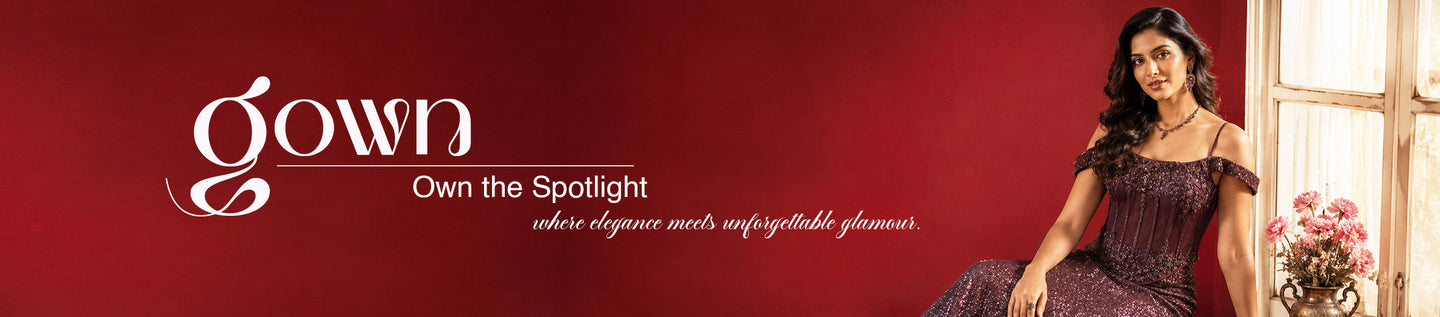
Gowns for Women
6 products


Golden Beige Cape Sleeve Embroidered Gown


Silver Grey Feather Detail Embroidered Designer Gown


Copper Bronze Sequin Designer Gown (V-Neck)


Grey Net Bridal Gown with Kardana Work


Pink Gown with Silver Stone Handwork


Blush Pink Sequin Embroidered A-Line Gown
- Featured
- Most relevant
- Best selling
- Alphabetically, A-Z
- Alphabetically, Z-A
- Price, low to high
- Price, high to low
- Date, old to new
- Date, new to old
Gowns for Women - Buy Designer Indian Gowns Online
A gown is the easiest formal outfit to wear: one piece, no drape to manage, nothing to re-pin. The Indian gown sets zari, sequins, kardana and embroidered net onto a floor-length Western pattern. Our range runs from a clean sequinned cut for a cocktail evening to an embroidered net gown for a reception.
What is an Indian gown?
An Indian gown is one floor-length stitched garment on a Western pattern — fitted bodice, a skirt falling from a seam between bust and hip — finished with Indian surface craft. Strip the embroidery off and you have an evening dress. Stitched to a size, it needs no draping and no dupatta; a cape or attached trail often stands in.
Indian gown vs lehenga, anarkali and saree: what is the difference?
A lehenga choli is three pieces — skirt, blouse, dupatta — with the waist exposed. A gown is one continuous piece from shoulder to floor, so the line is unbroken. A saree is unstitched cloth that becomes an outfit only once draped. The gown is the least demanding, and the least traditional. See our lehenga cholis for the ceremony, our sarees for the drape, our indo-western range for fusion.
Gown or anarkali?
An anarkali is a kurta silhouette: fitted through the chest, flaring from a high seam under the bust, over a bottom. A gown has no separate bottom and no dupatta, and its seam can sit at the waist, the hip, or nowhere at all. An anarkali reads Indian first; a gown reads formal first.
Designer gown fabric guide
Net is the workhorse of the Indian gown: sheer and light, it carries dense embroidery without collapsing, and always needs a lining. Georgette is fluid and moves as you walk. Satin is heavy, high-shine and unforgiving of whatever sits underneath. Organza holds a sculptural shape but creases; velvet belongs to winter weddings. In an Indian summer, weight matters more than fibre name.
Which gown silhouette suits your body shape?
An A-line is the safest cut: fitted at the top, widening to the floor, skimming hip and stomach without gripping. A straight column asks for an even line from bust to hip and rewards height. A mermaid grips to the knee before it flares, so plan for sitting down. An empire seam sits under the bust and skims everything below. Cape sleeves broaden the shoulder and balance fuller hips; a V-neck lengthens a short neck.
Which colour gown for a reception, sangeet, haldi or mehndi?
Match the shade to the function, not the season. Haldi is a daylight event, so marigold and orange photograph correctly in sun. Green is the traditional mehndi colour. Sangeet means warm artificial light that turns pastels grey, so rani pink, purple and deep blue hold up. For a reception, go deeper or metallic: wine, maroon, midnight blue, or the champagne-and-gold family, which reads expensive under chandeliers without competing with the bride.
Gown for wedding: how to style it
A gown is one uninterrupted surface, so it needs less jewellery than a lehenga. If the yoke is embroidered, skip the necklace and let statement earrings carry the look. Heels matter: the hem is cut to a length, so decide the shoe before the alteration. Carry a clutch or potli; a shoulder strap cuts across the bodice and ruins the line.
How to wash and store a gown
Dry clean anything embroidered, sequinned or built on net: the work fails before the cloth does, and a machine drum pops sequins and snags kardana. Plain georgette and crepe hand wash cold, but never wring them — press the water out in a towel and dry flat in shade; sun fades dye faster than washing does. Iron on the reverse under a cloth. Store the gown on a padded hanger in breathable cotton, not polythene.
Buy designer gowns online at Shree Shivam
We have been selling Indian ethnic and bridal wear for over a decade, with free pan-India shipping and a seven-day return window. Our wedding clothing covers the bigger functions, our sharara sets are a traditional alternative for a sangeet, and our co-ord sets take the contemporary end. Dressing as a couple? See our tuxedos.
FAQs
What is the difference between a gown and an anarkali?
An anarkali is a kurta silhouette: it fits through the chest, flares from a high seam under the bust, and is worn over a separate bottom, usually with a dupatta. A gown is one continuous stitched piece from shoulder to floor with no separate bottom and no dupatta obligation, and its seam can sit at the natural waist, at the hip, or nowhere at all. An anarkali reads as Indian wear first; a gown reads as formalwear first, and takes its Indian character from the embroidery, zari or sequin work on the surface rather than from the cut.
Which fabric is best for a wedding or reception gown?
Net is the usual answer for heavy occasion wear, because it is sheer and light and stands slightly away from the body, so it carries dense embroidery and sequin work without sagging under the weight — it does need a lining. Georgette is fluid and forgiving and moves as you walk. Satin is heavy and high-shine and shows whatever sits underneath, so it works best on a straight cut. Crepe is matte and skims rather than clings. Organza holds a sculptural shape but creases through a long function, and velvet suits winter weddings only. For a summer function, judge the weight of the cloth rather than the name of the fibre.
Which gown silhouette suits your body shape?
An A-line is the safest cut available: fitted at the top and widening gently to the floor, it skims the hip and stomach without gripping either. A straight column suits an even line from bust to hip and rewards height. A mermaid grips to the knee before flaring, so it needs confidence and a plan for sitting down comfortably. An empire seam sits under the bust and skims everything below, which makes it useful during pregnancy and generally forgiving. Cape sleeves broaden the shoulder and balance fuller hips, a V-neck lengthens a short neck, and a boat neck does the opposite. If you are petite, keep the surface work vertical and set the hem at your heel height.

